Showing posts with label Lexus. Show all posts

Friday, February 11, 2011

What Grinds My Gears about the Recent Developments in Toyota's Unintended Acceleration-Saga


A few things happened in the past 24 hours that grind my gears on the subject of Toyota Motor Corp.'s "unintended acceleration" saga. The first thing that ticked me off were some smart-ass headlines for the findings of NHTSA-NASA study from the same sources that were bashing the Japanese company with Daily Mirror-like titles a little over a year ago. That's something like looking at the mirror and saying who's the dummy now... No need for further explanations on that.

The other is that, Toyota, its PR associates and even some news sites / blogs are focusing on the software-related findings and either leaving outside or playing down the two mechanical defects - a.k.a. the “sticking” accelerator pedals and a design flaw that enabled accelerator pedals to become trapped by floor mats. These defects lead to some 8 million vehicles being recalled in the United States alone.

Yes, the study by NHTSA and NASA found no evidence for electronic-based cause for unintended high-speed acceleration, but that doesn't mean Toyota is innocent for the rest of the sudden acceleration-related issues nor for neglecting to notify the government agency of the sticky pedal defect for more than four months after the company found out about it.

By John Halas


[From NHTSA]

Timeline of Major Events

  • March 29, 2007: NHTSA opens a preliminary investigation into pedal entrapment on MY’07 Lexus ES350 models based on five consumer complaints alleging three crashes and seven injuries. The all weather floor mat is identified as the possible cause of these incidents.
  • July 26, 2007: A fatal crash occurs in San Jose, CA involving a ‘07 Camry in which the driver suffers serious injuries and the driver of the struck vehicle is killed. The incident also appears to have been caused by a pedal trapped by an all weather floor mat.
  • September 13, 2007: After determining the fatal San Jose crash was caused by floor mat entrapment, NHTSA tells Toyota a recall is necessary.
  • September 26, 2007: Toyota recalls 55,000 floor mats in ’07 and ‘08 Camrys and ES350s.
  • August 28, 2009: A fatal crash occurs in Santee, CA, involving a loaner ’09 ES350. The vehicle is found to have an all weather floor mat from another Lexus vehicle. Investigators find that the vehicle’s previous driver had reported an entrapment incident to the dealership.
  • September 25, 2009: NHTSA meets with Toyota and tells the company that the floor mat recall is insufficient and the agency expects a recall for the defect in pedal design. Three days later, Toyota tells NHTSA the company will recall the gas pedals.
  • October 5, 2009: Toyota recalls 3.8 million vehicles for pedal entrapment by floor mat and sends an interim letter to consumers telling them to remove floor mats. The defect remedy involves gas pedal reconfiguration, floor pan/carpeting revisions, and ‘brake pedal override’ software for vehicles with keyless ignition.
  • December 15, 2009: NHTSA officials meet with Toyota executives in Japan to explain NHTSA’s defect recall process and underscore Toyota’s obligations under U.S. law to find and report defects promptly. Toyota commits to making improvements.
  • January 16, 2010: Toyota informs NHTSA that certain CTS-brand pedals may have a dangerous ‘sticking’ defect. NHTSA calls an in-person meeting on January 19.
  • January 19, 2010: At the meeting, Toyota provides field reports on sticky pedal incidents, and NHTSA tells Toyota the agency expects prompt action. Toyota informs NHTSA several hours later that the company will issue a recall.
  • January 21, 2010: Toyota recalls 2.3 million vehicles for the sticky pedal defect.
  • January 27, 2010: At NHTSA’s urging, Toyota expands its pedal entrapment recall to cover an additional 1.1 million vehicles.
  • February 16, 2010: NHTSA launches an official probe into the timeliness and scope of the pedal entrapment and sticky pedal Toyota recalls.
  • March 30, 2010: At the request of Congress, the U.S. DOT announces two studies into unintended acceleration. One looks at possible electronics causes for unintended acceleration in Toyotas; the other examines unintended acceleration and the safety of vehicle electronics across the automotive industry.
  • April 5, 2010: NHTSA demands the maximum, $16.375 million, civil penalty on Toyota for its failure to notify the agency of the sticky pedal defect for more than four months after discovering it. Auto manufacturers are legally obligated to notify NHTSA within five business days of determining that a safety defect exists. Toyota pays the full fine on April 19.
  • December 20, 2010: Toyota agrees to pay the maximum $16.375 million civil penalty as the result of another NHTSA investigation into whether their recall of 5.5 million vehicles for pedal entrapment was conducted in a timely manner.

What Grinds My Gears about the Recent Developments in Toyota's Unintended Acceleration-Saga


A few things happened in the past 24 hours that grind my gears on the subject of Toyota Motor Corp.'s "unintended acceleration" saga. The first thing that ticked me off were some smart-ass headlines for the findings of NHTSA-NASA study from the same sources that were bashing the Japanese company with Daily Mirror-like titles a little over a year ago. That's something like looking at the mirror and saying who's the dummy now... No need for further explanations on that.

The other is that, Toyota, its PR associates and even some news sites / blogs are focusing on the software-related findings and either leaving outside or playing down the two mechanical defects - a.k.a. the “sticking” accelerator pedals and a design flaw that enabled accelerator pedals to become trapped by floor mats. These defects lead to some 8 million vehicles being recalled in the United States alone.

Yes, the study by NHTSA and NASA found no evidence for electronic-based cause for unintended high-speed acceleration, but that doesn't mean Toyota is innocent for the rest of the sudden acceleration-related issues nor for neglecting to notify the government agency of the sticky pedal defect for more than four months after the company found out about it.

By John Halas


[From NHTSA]

Timeline of Major Events

  • March 29, 2007: NHTSA opens a preliminary investigation into pedal entrapment on MY’07 Lexus ES350 models based on five consumer complaints alleging three crashes and seven injuries. The all weather floor mat is identified as the possible cause of these incidents.
  • July 26, 2007: A fatal crash occurs in San Jose, CA involving a ‘07 Camry in which the driver suffers serious injuries and the driver of the struck vehicle is killed. The incident also appears to have been caused by a pedal trapped by an all weather floor mat.
  • September 13, 2007: After determining the fatal San Jose crash was caused by floor mat entrapment, NHTSA tells Toyota a recall is necessary.
  • September 26, 2007: Toyota recalls 55,000 floor mats in ’07 and ‘08 Camrys and ES350s.
  • August 28, 2009: A fatal crash occurs in Santee, CA, involving a loaner ’09 ES350. The vehicle is found to have an all weather floor mat from another Lexus vehicle. Investigators find that the vehicle’s previous driver had reported an entrapment incident to the dealership.
  • September 25, 2009: NHTSA meets with Toyota and tells the company that the floor mat recall is insufficient and the agency expects a recall for the defect in pedal design. Three days later, Toyota tells NHTSA the company will recall the gas pedals.
  • October 5, 2009: Toyota recalls 3.8 million vehicles for pedal entrapment by floor mat and sends an interim letter to consumers telling them to remove floor mats. The defect remedy involves gas pedal reconfiguration, floor pan/carpeting revisions, and ‘brake pedal override’ software for vehicles with keyless ignition.
  • December 15, 2009: NHTSA officials meet with Toyota executives in Japan to explain NHTSA’s defect recall process and underscore Toyota’s obligations under U.S. law to find and report defects promptly. Toyota commits to making improvements.
  • January 16, 2010: Toyota informs NHTSA that certain CTS-brand pedals may have a dangerous ‘sticking’ defect. NHTSA calls an in-person meeting on January 19.
  • January 19, 2010: At the meeting, Toyota provides field reports on sticky pedal incidents, and NHTSA tells Toyota the agency expects prompt action. Toyota informs NHTSA several hours later that the company will issue a recall.
  • January 21, 2010: Toyota recalls 2.3 million vehicles for the sticky pedal defect.
  • January 27, 2010: At NHTSA’s urging, Toyota expands its pedal entrapment recall to cover an additional 1.1 million vehicles.
  • February 16, 2010: NHTSA launches an official probe into the timeliness and scope of the pedal entrapment and sticky pedal Toyota recalls.
  • March 30, 2010: At the request of Congress, the U.S. DOT announces two studies into unintended acceleration. One looks at possible electronics causes for unintended acceleration in Toyotas; the other examines unintended acceleration and the safety of vehicle electronics across the automotive industry.
  • April 5, 2010: NHTSA demands the maximum, $16.375 million, civil penalty on Toyota for its failure to notify the agency of the sticky pedal defect for more than four months after discovering it. Auto manufacturers are legally obligated to notify NHTSA within five business days of determining that a safety defect exists. Toyota pays the full fine on April 19.
  • December 20, 2010: Toyota agrees to pay the maximum $16.375 million civil penalty as the result of another NHTSA investigation into whether their recall of 5.5 million vehicles for pedal entrapment was conducted in a timely manner.

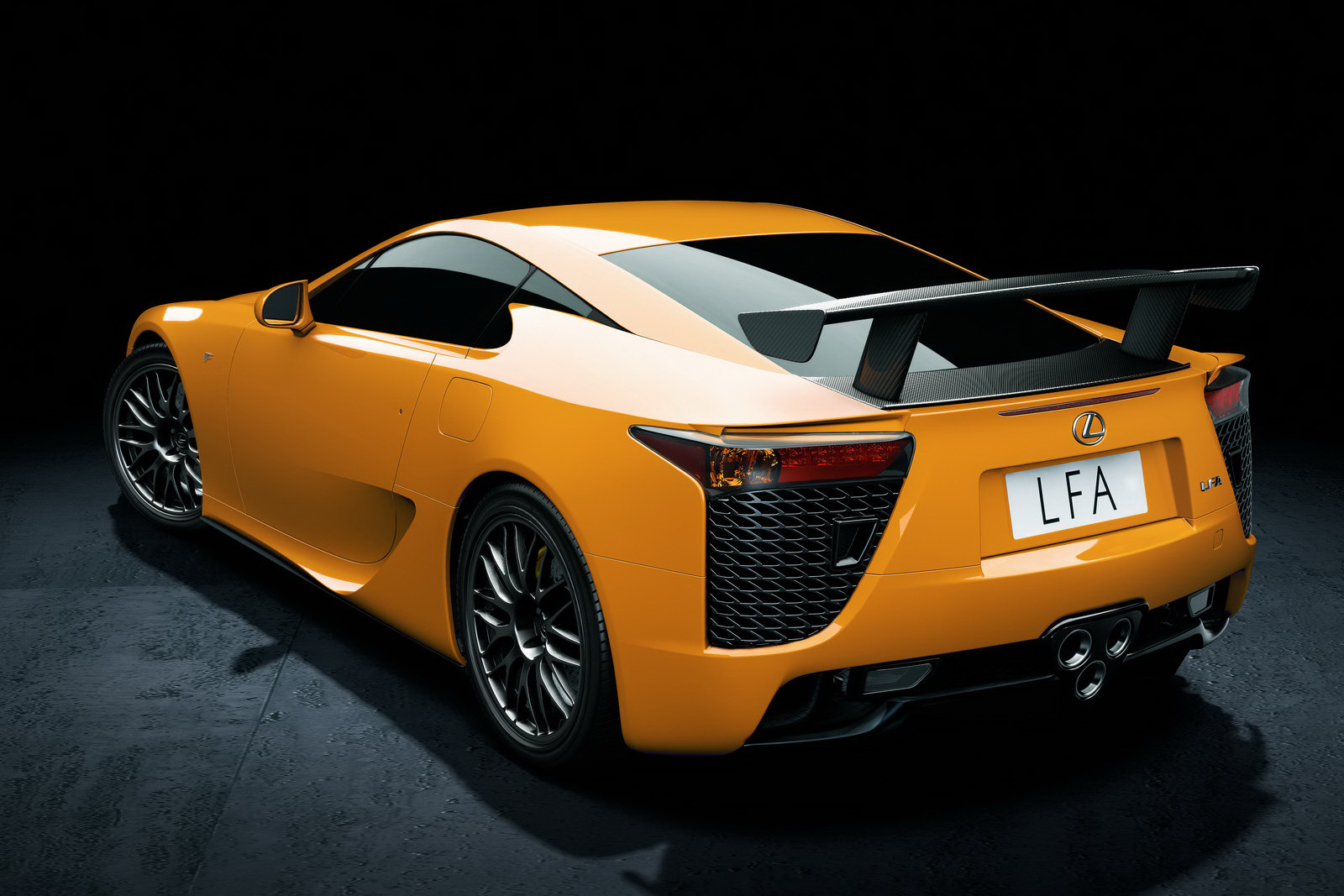
Lexus LFA Nürburgring to get its First Public Outing in Geneva

Nearly 3 months after the start of production of the standard LFA, Lexus will debut the more track-focused Nürburgring Edition at the Geneva Motor Show in March. While we've known about the bespoke version of the LFA since May, 2010, according to the Japanese automaker, this is the first time that the supercar will be shown in public.

Available as a special package on the options list, Lexus will build a maximum of 50 Nürburgring Editions out of a total of 500 LFAs. The limited production model gets additional aerodynamic features and technical revisions to improve handling and downforce, increases the V10 engine output by 10bhp to 562bhp and speeds up gear shifts in the six-speed sequential transmission.

In the United States, the Nürburgring package is priced at $70,000 while a Matte black finish carries an additional cost of $20,000. The MSRP of the standard LFA is $375,000.

Lexus LFA Nürburgring to get its First Public Outing in Geneva

Nearly 3 months after the start of production of the standard LFA, Lexus will debut the more track-focused Nürburgring Edition at the Geneva Motor Show in March. While we've known about the bespoke version of the LFA since May, 2010, according to the Japanese automaker, this is the first time that the supercar will be shown in public.

Available as a special package on the options list, Lexus will build a maximum of 50 Nürburgring Editions out of a total of 500 LFAs. The limited production model gets additional aerodynamic features and technical revisions to improve handling and downforce, increases the V10 engine output by 10bhp to 562bhp and speeds up gear shifts in the six-speed sequential transmission.

In the United States, the Nürburgring package is priced at $70,000 while a Matte black finish carries an additional cost of $20,000. The MSRP of the standard LFA is $375,000.

Wednesday, February 2, 2011

Chicago Preshow: Lexus CT 200h Concept Tune by Five Axis


Lexus will be showing off a wilder CT 200h prepared by parent company Toyota's tuning partner Five-Axis at the upcoming 2011 Chicago Auto Show, which runs for the public from February 11 to 20. The highly-modified Five Axis Project CT will be dressed in a custom made wide body kit with hybrid's bad-boy appearance further enhanced by the JDSU “Dark Passage” paint, the lowered ride height (thanks to a TEIN Flex coilover suspension system), and custom 19-inch FIVE:AD forged alloy wheels.

No word on any powertrain improvements, but the CT 200h concept study will get a bespoke interior treatment and a Stoptech High Performance Big Brake Kit on the front.

The Five Axis Project CT will be joined by numerous Lexus models including vehicles from last year’s SEMA Show such as a customized LS600h L by VIP Auto Salon and a revamped RX 450h courtesy of tuner Paul Tolson, EST Styling, plus the full range of production models like the 2012 LFA sports car.


Friday, January 28, 2011

Lexus GX470, 2003

Lexus GX470, 2003


The Lexus GX 470 is a mid-size SUV built in Tahara plant in Japan and sold only on the North American markets by Toyota's luxury division Lexus. It was introduced in November 2002 as a 2003 model as Lexus's true answer to the BMW X5, Acura MDX, Land Rover LR3 and Porsche Cayenne. It is the US market version of the Toyota Land Cruiser Prado. It was released at the same time as the Infiniti FX, its competitor.

The 2005 GX 470s are powered by a 4.7 L, 32-valve, four-cam V8 engine with 270 hp (201 kW) at 5,400 rpm and 330 ft·lbf (447 N·m) of torque at 3,400 rpm. This is also the largest engine that has ever been put into a Lexus.
The GX 470 has a welded steel body, an electronically controlled 5-speed automatic transmission, a 4 wheel drive system, and its interior offers a place for up to eight passengers.

The vehicle is a competent contender for serious off-roading while civilized enough for everyday driving. The MSRP is averaged at about US $50,000. It has won various awards including 4-Wheeler of the Year from 4X4 Magazine.
In the Lexus lineup, it is situated between the premium LX 470 and the entry-level luxury RX 350.

Lexus SC430, 2002

Lexus SC430, 2002


The Lexus SC series is a personal luxury coupé manufactured by the Toyota Motor Corporation under the Lexus brand and sold in Japan as the Toyota Soarer. The first generation, available as the SC 300 or SC 400 was in production from 1991 until July 7, 2000. A second-generation model, the SC 430, went into production in 2001.

Lexus showcased its new sports convertible, the SC 430, at the Paris Motorshow in 2000, and the car entered production the following year. Power was provided by a 4.3 L 3UZ-FE V8 engine mated to a five-speed automatic transmission. This produces 0-60 runs around 6 seconds using the same engine found in the Lexus LS.

Lexus designers from Europe and Japan worked together to create the convertible's sleek, streamlined design. The car features a retractable aluminium hardtop, all-leather interior, and 18 in alloy wheels. It can seat four and has a base price of US$63,825.
Competitors include the Mercedes-Benz SL-Class, Cadillac XLR, and Jaguar XK, and BMW 6-series.

Lexus LS430, 2002

Lexus LS430, 2002


The Lexus LS (sold as the Toyota Celsior in Japan, Australia, and some other countries.) is a V8-powered, rear wheel drive luxury car that serves as the flagship of Toyota's luxury Lexus division.

First generation (UF10)

UF10 I (1989)
The UF10 I LS 400 was produced from 1989 to 1994. The model introduced the Lexus nameplate to the US, and soon after won critical acclaim, becoming Wheels magazine's Car of the Year and earning a place on Car and Driver magazine's Ten Best list for 1990. The LS 400 was initially intended to be introduced as a standalone model for Lexus, but ultimately was sold alongside the ES 250, an entry-level luxury car that was based on the Toyota Camry.

UF10 II (1993)
For the 1993 model year, the LS 400 (now designated as the UF10 II) was introduced with larger brake rotors, standard passenger's side front airbags, larger wheels and tires, and numerous other upgrades.

Second generation (UF20)

UF20 III (1995)

Introduced in 1995, the UF20 III LS 400 was an evolutionary redesign of the LS and featured a new body that eliminated 300 lb from the previous car. The wheelbase was increased by 1.4 in, resulting in more interior and trunk space, yet the overall length of the car remained at 196.7 in. The durability of the brake system was improved as well.

The most noticeable cosmetic upgrades included a new front fascia with an increased gap between the headlights and grille, new headlights and taillights. The interior received a minor redesign with a more modern dashboard layout and the center console receiving a slight facelift.

UF20 IV (1998)
Lexus LS430

For the 1998 model year, the UF20 IV LS 400 was introduced. New interior amenities included retractable rear headrests, wood accents on the leather-bound steering wheel and gear selector, and a navigation system with a concealed antenna. A new "jam protection system" for the vehicle's windows was designed to reduce the risk of possible injury by preventing the windows from closing if an object came in between the window and the door frame. Door window controls were also added to the vehicle remote control.

Exterior updates included new five spoke wheels as well as redesigned rear view mirrors that reduced the amount of wind noise. The automatic headlights were now equipped with a delay feature that allowed the headlights to remain on while the occupants exited the vehicle.

The revised LS 400 featured Toyota's new 290 hp VVT-i UZ engine mated to a five-speed automatic transmission. The drivetrain improvements not only enabled the 3,890 lb sedan to accelerate from 0-60 mph in 6.5 seconds but also improved the vehicle's fuel economy.

Third generation (UF30)
UF30 I (2001)
For 2001, the UF30 I LS 430 was introduced. While previous LS redesigns were evolutionary, the 2001 update was a more thorough update of the model's exterior and interior. The UF30 had a completely redesigned suspension and a brand new 4.3 L engine generating 290 hp (216 kW) and 320 ft•lbf (434 N•m) of torque. Lexus claims the LS430 can run 0-60mph in 5.9 seconds. A three-inch wheelbase stretch resulted in more interior volume than the competing Mercedes-Benz S-Class and allowed the engine to be positioned farther rearward for better balance. Features such as Dynamic Laser Cruise Control, a DVD-based navigation system and heated & cooled seats became available. These and other features, such as sonar assisted parking, power rear seats with massage and a rear cooler were bundled in the 'Ultra Luxury Package.'

In the interior the most notable design changes included additional woodgrain trim on the dashboard and doors as well as the addition of an LCD screen on the center console. The exterior of the vehicle was completely new with the vehicle's dimensions increasing in terms of length and height.

UF30 II (2004)
The UF30 II was introduced in 2004. Lexus freshened the front & rear fascias and added as standard equipment previously optional features, such as a one-touch power moonroof, power rear sunshade, and lighted rear-seat vanity mirrors. Some features previously included in the Custom and Ultra Luxury packages became available separately. The transmission got an added sixth gear, and keyless 'smart access' and Bluetooth technology became optional, while a pre-collision system, similar to Mercedes-Benz's Pre-Safe, which used millimeter-wavelength radar to predict crashes and allow distance-aware cruise control, was added as an option. Other updates included different wheels, projector headlamps, and LED taillights.

The 2001 to 2006 LS 430 was the most reliable luxury sedan in the J.D. Power and Associates Initial Quality survey, and the early models of this series were the most reliable cars in the survey. In later studies of defects after 3 years of ownership, the LS 430 is also at the top of the pack. The third season of the popular BBC television program, Spooks, featured a number of Lexus LS vehicles as part of the brand's introduction in the British market.

Wednesday, January 26, 2011

Lexus Issues Voluntary Recall on 245,000 GS and IS Models in the U.S.


Lexus has issued a voluntary safety recall involving some 245,000 cars in the U.S. because of a potential defect that may cause fuel leakage. The models affected by the recall include the GS300 and GS350 from the 2006-2007MY, the IS 250 from the 2006-2009MY, and the IS 350 from the 2006-2008MY.

The company said that due to insufficient tightening, the connection between the fuel pressure sensor and a certain fuel line could loosen over time, resulting in a possible fuel leak. No accidents related to the problem have been reported to date.

According to statement from Lexus' parent company Toyota, the firm's dealers will inspect the vehicles and if no leakage is found, will tighten the sensor with the proper torque. In case of a confirmed fuel leak, the gasket between the fuel sensor and the delivery pipe will be replaced and the sensor tightened. As expected, all operations will be conducted free of charge.


_______________________________GALLERY_______________________________


Sunday, January 23, 2011

Lexus SC430 Pace Car, 2001

Lexus SC430 Pace Car, 2001


The Lexus SC series is a personal luxury coupé manufactured by the Toyota Motor Corporation under the Lexus brand and sold in Japan as the Toyota Soarer. The first generation, available as the SC 300 or SC 400 was in production from 1991 until July 7, 2000. A second-generation model, the SC 430, went into production in 2001.

Lexus showcased its new sports convertible, the SC 430, at the Paris Motorshow in 2000, and the car entered production the following year. Power was provided by a 4.3 L 3UZ-FE V8 engine mated to a five-speed automatic transmission. This produces 0-60 runs around 6 seconds using the same engine found in the Lexus LS.

Lexus designers from Europe and Japan worked together to create the convertible's sleek, streamlined design. The car features a retractable aluminium hardtop, all-leather interior, and 18 in alloy wheels. It can seat four and has a base price of US$63,825.

Competitors include the Mercedes-Benz SL-Class, Cadillac XLR, and Jaguar XK, and BMW 6-series.

Thursday, January 20, 2011

Lexus Tries to Lure UK Buyers with Special Edition IS Advance Models


Lexus has announced the availability of a pair of new special edition cars for the UK market called the IS 250 and IS 200d Advance. As is common with most special or limited edition models these days, the new IS cars are distinguished by the added -and not unique- features to the standard equipment.

Based on the regular SE specification, the new IS 250 and 200d Advance models come equipped with a hard disc drive (HDD) satellite navigation system, rear parking camera, heated electrically adjustable front seats, front and rear parking sensors, cruise control, rain-sensing windscreen wipers and an auto-dimming rear view mirror.

These extras would normally cost an arm and leg if they were to be added to the SE separately, but in this case, the new Advance IS 250 costs just an extra £340 compared its SE equivalent (£26,495 on-the-road), with the diesel-powered IS 200d coming in at an additional £130 (£24,995).

Both cars are on sale in the UK now.


_______________________________GALLERY_______________________________